
RRVL will make an open offer to acquire up to an additional 2.17 crore equity shares of Just Dial, representing 26 per cent stake, in accordance with Sebi Takeover Regulations, a regulatory filing said.

Mandarin Oriental New York, the premium luxury hotel a subsidiary of Reliance Industries is acquiring, is known for its much-in-demand ballroom, five-star spa and eating and drinking venues, including MO Lounge. Liam Neeson and Lucy Liu are among regular guests. Set up in 2003, 248-rooms-and-suites hotel towering over Central Park is an iconic luxury hotel located at 80 Columbus Circle, directly adjacent to the pristine Central Park and Columbus Circle.

The key assets put on the block include its entire stake in Reliance General Insurance Company, the third-largest private sector insurer, and a 49 per cent stake in Reliance Nippon Life Insurance, a joint venture with Nippon Life, which is among the top five private-sector insurance companies.

Benchmark equity indices Sensex and Nifty declined nearly 1 per cent on Wednesday, falling for the fourth day running amid profit-taking by cautious investors ahead of the results of the Lok Sabha polls. The 30-share BSE Sensex declined 667.55 points or 0.89 per cent to settle at 74,502.90. It went below the 75,000 mark to hit the day's low of 74,454.55, plunging 715.9 points or 0.95 per cent.

Ramping up e-commerce operations and going beyond its current strongholds are key challenges for the grocery chain in its battle with Mukesh Ambani's retail behemoth.

Investors' wealth eroded by Rs 6 lakh crore in a single day on Wednesday as the BSE benchmark Sensex tumbled over 790 points. The 30-share BSE Sensex fell by 790.34 points or 1.08 per cent to settle at 72,304.88. During the day, it slumped 872.93 points or 1.19 per cent to 72,222.29.

Reliance Retail will acquire the retail, wholesale, logistics and warehousing businesses of the Future Group. Future Group's financial and insurance businesses are not part of the deal.

Among the 30 Sensex companies, Kotak Mahindra Bank, Asian Paints, Reliance Industries, ITC, Sun Pharma, ICICI Bank, Axis Bank and JSW Steel were the major laggards. Larsen & Toubro, Tata Motors, Maruti, NTPC, Mahindra & Mahindra and UltraTech Cement were among the gainers.

Among the Sensex firms, Maruti, NTPC, Tata Motors, ICICI Bank, HDFC Bank, Reliance Industries, JSW Steel, ITC and Mahindra & Mahindra were the major laggards. Bajaj Finance, Larsen & Toubro, Bajaj Finserv and Titan were among the gainers.

Among the Sensex firms, Infosys, NTPC, Power Grid, Titan, ITC, Tech Mahindra, Hindustan Unilever, Axis Bank, Tata Consultancy Services, Bajaj Finserv, Reliance Industries and UltraTech Cement were the biggest gainers. In contrast, IndusInd Bank, Kotak Mahindra Bank, Mahindra & Mahindra, JSW Steel, HDFC Bank and Maruti were the major laggards.
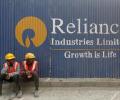
With the O2C business outlook on the mend, the Street is also looking forward to news on RIL's proposal to sell up to 20 per cent of the O2C business to a strategic investor like Saudi Aramco.

Riding on a bull run, equity investors became richer by Rs 128.77 lakh crore in the 2023-24 fiscal, driven by robust fundamentals of the Indian economy, increased investment inflows and promising corporate earnings. After a muted performance in 2022-23, equity markets made a remarkable recovery in FY24, giving handsome returns to investors. The 30-share BSE Sensex climbed 14,659.83 points or 24.85 per cent in 2023-24.

Reliance Industries was the biggest gainer in the Sensex pack, rising 2.69 per cent, followed by HCL Tech, ICICI Bank, Tata Motors, Wipro, IndusInd Bank, JSW Steel, Wipro, Tata Consultancy Services and Titan. In contrast, NTPC, Power Grid, UltraTech Cement, Axis Bank, Infosys and Nestle were the major laggards.

Investors' wealth jumped Rs 13.78 lakh crore on Monday as the benchmark equity index Sensex hit its lifetime high after exit polls predicted a massive win for the BJP-led NDA in the Lok Sabha polls. The 30-share BSE Sensex jumped 2,777.58 points or 3.75 per cent to hit a record peak of 76,738.89 in early trade. The benchmark finally ended at 76,468.78, registering a sharp rally of 2,507.47 points or 3.39 per cent.

From the Sensex basket, Titan, Reliance Industries, Asian Paints, Tech Mahindra, IndusInd Bank, UltraTech Cement, Wipro and ITC were the major laggards. ICICI Bank, Infosys, Bajaj Finserv, Tata Steel, Axis Bank, Bajaj Finance, Nestle and Mahindra & Mahindra were among the major gainers.

Just ahead of its mega FPO opening to public investors, Vodafone Idea (VIL) has announced closure of its anchor book allocation, raising about Rs 5,400 crore from marquee global as well as domestic investors, according to a statutory filing by the telco. This could be the third-largest anchor book after One 97 Communications and Life Insurance Corporation (LIC). One 97 Communications and LIC had raised Rs 8,235 crore and Rs 5,627 crore in the anchor round, respectively.

From the 30 Sensex pack, State Bank of India, Mahindra & Mahindra, Bharti Airtel, Titan, HDFC Bank, IndusInd Bank, Axis Bank and Bajaj Finance were the biggest laggards. JSW Steel, Tech Mahindra, Larsen & Toubro, Hindustan Unilever, HCL Technologies and Reliance Industries were among the gainers from the pack.

In a regulatory filing, Reliance -- the country's most valuable company - said, 'The 43rd AGM will be held on Wednesday, July 15, 2020 at 2 pm though video conferencing / other audio-visual means.'

As many as 3.2 lakh shareholders attended the meeting on the newly-minted JioMeet platform from 550 cities in 48 countries.

Mutual funds (MFs) are set to be net sellers of Indian equities for the first time in the past seven financial years, having sold stocks worth about Rs 1.27 trillion so far in 2020-21 (FY21), making it the highest net sales on record in a financial year. MFs had been net buyers in the previous six financial years, including purchases of over Rs 1.41 trillion in FY18, Rs 88,152 crore in FY19, and Rs 91,814 crore in FY20. The last time they offloaded Indian equities was in FY14, when they net sold stocks worth Rs 21,159 crore. In contrast, foreign portfolio investors (FPIs) have ramped up buying in FY21, purchasing more than Rs 2.6 trillion worth of shares.

Among the Sensex firms, Bajaj Finance, Bharti Airtel, Maruti, Bajaj Finserv, HCL Technologies, Titan, Hindustan Unilever, JSW Steel, UltraTech Cement, State Bank of India and Reliance Industries were the major laggards.

The market capitalisation of listed companies on the NSE surpassed $5 trillion (Rs 416.57 trillion) on Thursday on a day when the Nifty 50 index touched an all-time high of 22,993.60. The Nifty 500 index also touched an all-time high of 21,505.25 on Thursday indicating that growth in the equity market is not restricted to only the large capitalised stocks, a statement by NSE said.
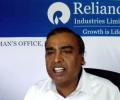
Shares of Mukesh Ambani-owned Reliance Industries Limited (RIL) rose nearly 1 per cent on Tuesday, hitting an intraday high of Rs 2,986.05 per share, after most brokerages reacted positively to the company's March quarter (Q4FY24) results. The bullish outlook stems from Reliance Jio's potential tariff hikes, given the competitive landscape, along with slow but steady improvement in the oil-to-chemical (O2C) vertical.

India's thriving mutual fund (MF) industry is drawing interest from several firms, with multiple applications submitted to the Securities and Exchange Board of India (Sebi) for asset management company (AMC) licences.


Nestle India, HCL Tech, M&M, HDFC Bank, Maruti and Tech Mahindra were also among the losers. NSE Nifty tumbled 97.70 points to 11,202.85.

It came as a surprise to all stakeholders - competing telecom companies (telcos), most analysts and even the government's internal projections on revenues from the 5G auctions. Reliance Jio disrupted all calculations by paying a stiff Rs 40,000 crore to buy 10 MHz of spectrum in the 700-MHz band, globally considered a key band for efficient 5G service coverage, along with the default 3.5 GHz band and the ultra-high speed and low-latency millimetre band of 26 GHz band. So what made Jio pay almost 45 per cent of its total spend in this auction for the 700 MHz band - much more than what it rustled up even for the 3.5 GHz band?
RLTEF has a relatively straightforward portfolio strategy.

On a five-day rolling basis, FPI selling is the highest in 24 years.

Among the Sensex firms, UltraTech Cement, Reliance Industries, ICICI Bank, HDFC Bank, Bharti Airtel, IndusInd Bank, State Bank of India, Tata Consultancy Services, Larsen & Toubro, Kotak Mahindra Bank and State Bank of India were the major gainers. In contrast, Tata Motors, Maruti, Axis Bank, Mahindra & Mahindra, ITC, NTPC, Tata Steel and Bajaj Finserv were the major laggards.

The Hinduja group is learnt to be looking at alternative means of financing, including private credit, to fund its Rs 9,661 crore all-cash offer to acquire Reliance Capital. The regulator, Insurance Regulatory & Development Authority of India (Irdai), had earlier rejected the collateral offered by the group to raise funds. The Hinduja group was in talks with Barclays, JPMorgan, Cerberus Capital Management and Apollo Global Management to raise up to $850 million.
From the Sensex basket, ITC, Kotak Mahindra Bank, Bharti Airtel, State Bank of India, Asian Paints, Tech Mahindra, Reliance Industries and Nestle were the major gainers. Maruti, HDFC Bank, Larsen & Toubro and Mahindra & Mahindra were among the laggards.
Among the Sensex firms, IndusInd Bank was the biggest loser and fell 6.13 per cent, followed by SBI (3.99 pc), Hindustan Unilever (3.82 pc), Axis Bank (3.41 pc) and HDFC Bank (3.23 pc). In contrast, Sun Pharma, Bharti Airtel, ICICI Bank and PowerGrid defied the trend and closed with gains of up to 3.67 per cent. TCS and Bajaj Finserve were the other gainers.

State Bank of India was the biggest gainer in the Sensex pack, rising 4.24 per cent, followed by Tata Steel, Axis Bank, Maruti, NTPC, PowerGrid, ITC and Nestle India. Reliance jumped 1.15 per cent to end at Rs 2,962.60 apiece on BSE.

The deal street has come out of the record lows in the pandemic-washed out June quarter with transaction value growing almost 6 per cent to $21.64 billion in the July-September quarter, thanks to a string of equity sales by Reliance in its telecom and retail arms, says a report.

Benchmark equity indices Sensex and Nifty slumped over 1 per cent on Friday, tracking a weak trend in global markets and fresh foreign fund outflows. Falling for the third day running, the 30-share BSE Sensex tumbled 1,017.23 points or 1.24 per cent to settle at 81,183.93.

Shares of Reliance Industries climbed around 3 per cent to hit a record closing high of Rs 2,060.65. SBI, ICICI Bank, Tech Mahindra, ITC and Kotak Bank were among the other winners. NSE Nifty advanced 82.85 points, or 0.74 per cent, to close at 11,215.45.

Benchmark equity indices Sensex and Nifty settled with marginal gains on Thursday in a highly volatile trade amid the scheduled monthly derivatives expiry and muted trend in the US markets. The 30-share BSE Sensex closed 86.53 points or 0.13 per cent higher at 66,988.44, registering its third day of gains. During the day, it hit a high of 67,069.89 and a low of 66,610.35.
Benchmark stock indices Sensex and Nifty rallied more than 1.6 per cent to close at lifetime high levels on Thursday following buying in banking, oil and auto shares and a record dividend payout by the RBI to the government. Regaining the 75,000 level after its best single-day gain since January 29, the 30-share BSE Sensex closed at all-time peak of 75,418.04, up by 1,196.98 points or 1.61 per cent over the last close.

Equity investors suffered a massive loss of Rs 31 lakh crore on Tuesday as markets went into a tailspin with the BSE Sensex tumbling nearly 6 per cent as vote counting trends showed the BJP may not have a clear majority in the Lok Sabha polls. Erasing the record-rally of the previous trade, the 30-share BSE Sensex cracked 4,389.73 points or 5.74 per cent to settle at 72,079.05. During the day, the benchmark tanked 6,234.35 points or 8.15 per cent to hit a nearly five-month low of 70,234.43.
